
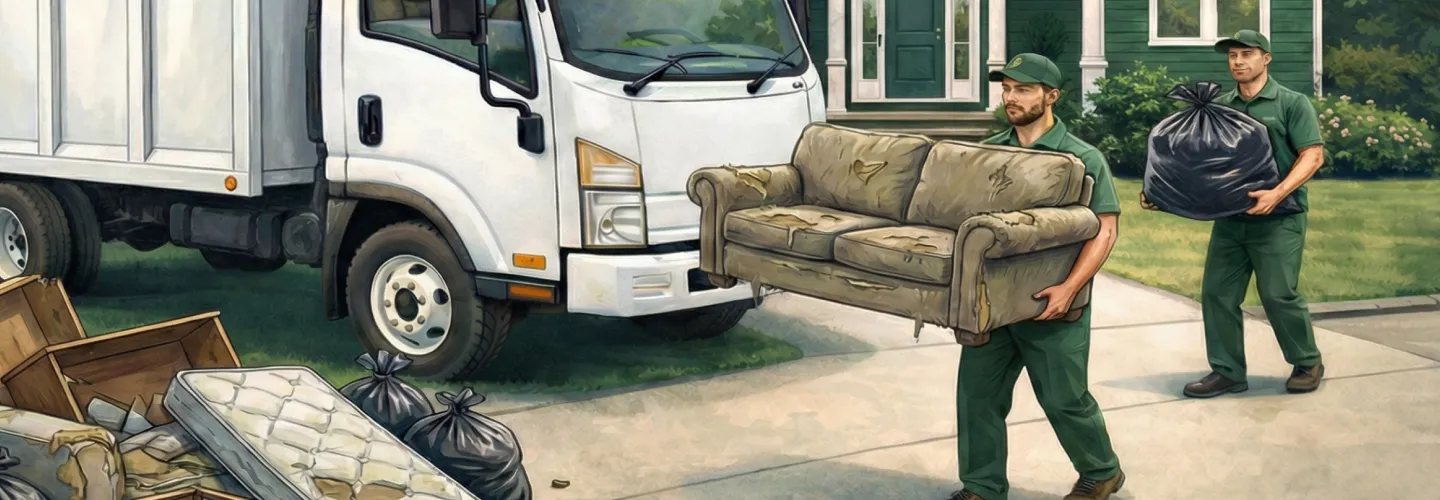
Hampton Office Junk Removal Services
Choose our Office Junk Removal for fast, reliable, and eco-friendly service that keeps your business running smoothly and your office space organized.
Get a Free QuoteOur Hampton Junk Removal Services
Office Junk Removal in Hampton, GA – Local Service Guide
Office junk removal in Hampton, GA is essential for maintaining productive, clutter-free workspaces in a growing business community. Whether you’re relocating, renovating, or simply clearing out old equipment, timely removal helps keep operations efficient and compliant with local standards. In neighborhoods like Tara Place and near the Hampton Depot, businesses often schedule removals during seasonal transitions or after major upgrades. Local disposal options include recycling electronics and donating usable furniture, while larger items may require coordination with city services. For residential items, triggers include spring cleaning, moving, or replacing appliances—especially in areas like Lovejoy Road, where access and weather can impact logistics. Commercial sectors such as retail and medical offices in downtown Hampton face unique needs, often requiring discreet, after-hours service and careful handling of sensitive materials. Specialty projects, like construction debris or estate cleanouts, demand advance planning and adherence to city guidelines for safe, legal disposal.
Key Considerations for Office Junk Removal in Hampton
- Timing removals to avoid peak business hours and local events
- Securing necessary permits and understanding local ordinances
- Choosing proper disposal or recycling channels for electronics and furniture
- Ensuring clear access for removal teams, especially in historic districts
- Estimating volume and coordinating pickups for large or specialty items
- Addressing category-specific requirements, such as confidential document disposal
Benefits of Office Junk Removal in Hampton
Fast and Efficient Service
Eco-Friendly Disposal
Flexible Scheduling Options
Professional and Insured Team
Improved Office Productivity
Transparent Upfront Pricing
Coordinating Office Junk Removal with Hampton's Public Works and Sanitation Services
Office cleanouts in Hampton require coordination with municipal waste management to ensure proper disposal of commercial materials. Hampton's Public Works Department oversees sanitation services, stormwater management, and infrastructure maintenance, making it the primary point of contact for businesses planning large-scale office junk removal projects. Commercial entities generating bulk waste must verify whether their materials qualify for municipal collection or require a licensed private hauler. Key considerations for office junk removal coordination include:
- Commercial waste classification: Office furniture, filing cabinets, and general debris may be classified differently than residential bulk waste under Hampton's municipal ordinances
- Hauler licensing: Private junk removal companies operating within city limits must comply with local business licensing requirements
- Scheduling restrictions: Noise ordinances may limit removal operations to standard business hours in certain zones
- Volume thresholds: Large office cleanouts exceeding standard collection limits require advance arrangements with approved disposal facilities
Businesses should contact the Public Works Department before initiating any office junk removal project to confirm applicable regulations and disposal procedures.
Hampton Public Works Department
1907 Highway 81, Hampton, GA 30228
Phone: (770) 946-4306
Official Website: Hampton Public Works Department
Georgia's Solid Waste Management Act and Office Equipment Disposal Compliance
Office junk removal in Hampton must comply with Georgia's solid waste regulations administered by the Georgia Environmental Protection Division (GA EPD). The Georgia Comprehensive Solid Waste Management Act (O.C.G.A. § 12-8-20 et seq.) establishes statewide requirements for the handling, transport, and disposal of solid waste, including commercial office materials. Henry County, where Hampton is located, operates under a regional solid waste management plan that governs disposal facility access and recycling expectations. Important compliance points for office junk removal include:
- Solid waste permits: Haulers transporting office waste must hold valid Georgia solid waste handling permits issued by GA EPD
- Manifest requirements: Loads containing mixed commercial waste may require documentation for tracking from point of origin to disposal facility
- Prohibited materials: Hazardous items such as toner cartridges containing residual chemicals, fluorescent lighting tubes, and batteries must be separated and handled through approved hazardous waste channels
- Landfill restrictions: Lead-acid batteries are banned from Georgia landfills statewide; rechargeable batteries should be directed to certified recycling programs such as Call2Recycle
Businesses in Hampton should verify that any junk removal service provider maintains current GA EPD permits and follows proper chain-of-custody documentation for all disposed materials.
Georgia Environmental Protection Division
2 Martin Luther King Jr. Drive SE, Suite 1456, Atlanta, GA 30334
Phone: (404) 656-4713
Official Website: Georgia Environmental Protection Division
Electronics Recycling and E-Waste Handling Requirements for Hampton Office Cleanouts
Office environments typically generate significant quantities of electronic waste, including desktop computers, monitors, printers, servers, networking equipment, and telecommunications devices. While Georgia does not currently enforce a statewide e-waste landfill ban, responsible disposal of office electronics remains critical for environmental protection and data security. The EPA's Resource Conservation and Recovery Act (RCRA) governs hazardous components found in many electronic devices, including lead in CRT monitors and mercury in older flat-panel displays. Hampton businesses should observe the following e-waste handling protocols:
- CRT monitors: Contain 4–8 pounds of lead; classified as hazardous waste if disposed improperly and must be directed to certified e-waste recyclers
- Data destruction: Hard drives, solid-state drives, and storage media require certified data destruction or degaussing before disposal to protect sensitive business information
- Printer cartridges and toner: Many contain residual chemical compounds; manufacturer takeback programs are available through most major brands
- Batteries: Lithium-ion and nickel-cadmium batteries from laptops and UPS systems must be recycled separately through programs like Call2Recycle
- Fluorescent tubes: Office lighting fixtures containing mercury are regulated under Georgia's hazardous waste rules and cannot be placed in standard waste streams
Henry County periodically hosts household hazardous waste collection events that may accept limited quantities of business electronics. Contact Henry County Solid Waste Management for upcoming event schedules and accepted item lists.
Building Permits and Code Compliance for Office Renovation Debris in Hampton
Office junk removal projects frequently coincide with tenant improvements, lease turnovers, or full-scale renovations that generate construction and demolition debris alongside standard office waste. Hampton's Building Inspections Department administers permits and code compliance for commercial renovation projects, and certain office cleanout activities may trigger permit requirements. Key regulatory considerations include:
- Demolition permits: Removal of built-in office fixtures, partition walls, or ceiling systems may require a demolition or renovation permit from Hampton Building Inspections
- Asbestos surveys: Commercial buildings constructed before 1980 may contain asbestos in floor tiles, ceiling tiles, pipe insulation, or joint compounds; Georgia requires a thorough asbestos survey before renovation or demolition activities per GA EPD Air Protection Branch regulations
- Lead paint: Buildings constructed before 1978 may contain lead-based paint; the EPA Renovation, Repair, and Painting Rule mandates lead-safe work practices by certified firms
- Stormwater protection: Debris removal activities must not allow materials to enter storm drains; Hampton's Stormwater Management program enforces erosion and sediment control measures during commercial projects
- Fire code clearance: Staging areas for removed office materials must maintain clear egress paths and fire lane access per Henry County Fire Rescue requirements
Businesses should submit permit applications well in advance of scheduled office cleanout dates to avoid project delays.
Hampton Building Inspections Department
1907 Highway 81, Hampton, GA 30228
Phone: (770) 946-4306
Official Website: Hampton Building Inspections
Office Furniture Donation and Material Recovery Programs Serving Hampton Businesses
Before disposing of office furniture and equipment through landfill-bound waste streams, Hampton businesses should explore donation and material recovery options that support landfill diversion and community benefit. Reusable office items such as desks, chairs, conference tables, shelving units, and filing cabinets can often be redirected to charitable organizations, reducing disposal costs and environmental impact. Available recovery and donation channels include:
- Habitat for Humanity ReStore: Accepts office furniture, fixtures, and building materials in good condition; locations in the greater Henry County and south metro Atlanta area accept drop-offs and may arrange pickup for large donations
- Goodwill of North Georgia: Accepts functional office furniture and small electronics at donation centers throughout the region
- Scrap metal recovery: Metal desks, filing cabinets, shelving, and cubicle frames contain recyclable steel and aluminum; scrap metal facilities in Henry County accept these materials, often at no charge or for payment based on weight
- Carpet and flooring recycling: Commercial carpet tiles and broadloom carpet may be accepted by manufacturer takeback programs or regional carpet recycling facilities
- Office supply reuse: Binders, organizers, and supplies in usable condition can be donated to local schools, nonprofits, or community organizations
Hampton's Main Street and Economic Development office may provide referrals to local organizations accepting business donations. Documenting donated items with photographs and receipts supports potential tax deduction claims for qualifying charitable contributions.
What Neighborhoods Do We Serve Throughout Hampton, GA?
- Downtown Hampton: The historic commercial core along Main Street features older office buildings and mixed-use structures. Narrow street frontage and on-street parking limitations may require advance coordination for loading zone access during office cleanout projects.
- Bear Creek Estates: This residential and small-office area features single-story commercial spaces with direct parking lot access. Standard removal trucks can typically navigate the wide residential streets without access restrictions.
- Hampton Village: A growing mixed-use area with newer commercial developments and office suites. Building management coordination is typically required for shared loading areas and common hallway access during furniture and equipment removal.
- Lovejoy Road Corridor: Commercial properties along this corridor include professional offices and retail spaces. Higher traffic volumes during business hours may necessitate scheduling removal operations during early morning or weekend windows.
- West Hampton / Highway 19-41 Area: This commercial zone includes strip-center offices and standalone professional buildings. Direct storefront access simplifies equipment removal, though shared parking lots require coordination with adjacent tenants.
- Talmadge Road Area: A mix of residential properties and small professional offices characterizes this area. Narrower lot configurations and mature tree canopy may limit truck positioning and require careful equipment staging during removal operations.