
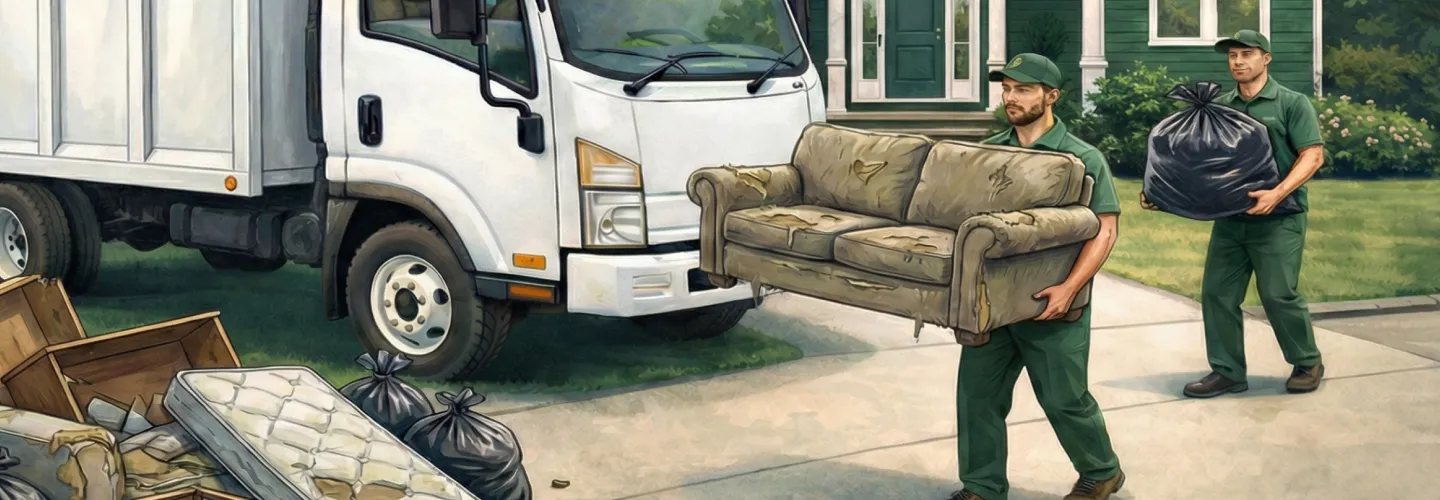
Hampton Appliance Removal Services
Choose our appliance removal service for hassle-free pickups, eco-friendly disposal, and courteous professionals who respect your time and property—making it easy to clear out old appliances with confidence.
Get a Free QuoteOur Hampton Junk Removal Services
Appliance Removal in Hampton, GA – Local Service Guide
Appliance removal in Hampton, GA is a common need for homeowners and businesses, especially during seasonal upgrades, property renovations, or after major life events. In neighborhoods like Crystal Lake and Tara Place, residents often schedule appliance removal when replacing outdated refrigerators, washers, or stoves—typically during spring cleaning or after moving. Local disposal options include donation to area charities, recycling at approved centers, or arranging for municipal pickup. Access and logistics can vary: larger appliances may require special handling, especially in homes with narrow driveways or during rainy weather. For commercial properties in the downtown district or near the Speedway, timely removal is crucial to maintain operations and comply with local ordinances. Specialty projects, such as estate cleanouts or construction debris removal, demand careful planning and coordination with city services. For guidance on local rules and resources, visit the Hampton Public Works Department.
Key Considerations for Appliance Removal in Hampton
- Schedule around peak seasons (spring/fall) and local events
- Check if permits are needed for curbside or bulk pickup
- Use approved disposal or recycling channels to comply with city rules
- Ensure clear access for removal teams, especially in older neighborhoods
- Estimate appliance volume for proper vehicle sizing and coordination
Benefits of Appliance Removal in Hampton
Fast and Reliable Service
Eco-Friendly Disposal
Licensed and Insured Team
Upfront Transparent Pricing
Convenient Scheduling Options
Safe Appliance Handling
Coordinating Appliance Removal with Hampton's Public Works and Sanitation Services
Residents of Hampton, GA, must coordinate appliance disposal through the city's designated sanitation and public works channels. Large household appliances—including refrigerators, washing machines, dryers, dishwashers, and stoves—are classified as bulky items and typically cannot be placed in standard curbside collection. Hampton's Public Works Department oversees municipal infrastructure services, including sanitation operations, and can direct residents to approved disposal methods.
Key steps for coordinating appliance removal in Hampton include:
- Contact Public Works before placing any appliance curbside to confirm pickup eligibility and scheduling requirements
- Separate appliances from regular household waste; mixing bulky items with standard trash may result in collection refusal
- Confirm accepted items, as appliances containing refrigerants (refrigerators, freezers, air conditioners) require special handling before disposal
- Verify collection day requirements, including placement location and any preparation steps such as removing doors from older units for safety
Residents should review Hampton's municipal ordinances governing property maintenance and waste disposal to ensure compliance with local standards.
Hampton Public Works Department
1907 Highway 81, Hampton, GA 30228
Phone: (770) 946-4306
Official Website: Hampton Public Works Department
EPA Refrigerant Recovery Requirements for Appliance Disposal in Hampton
Federal environmental law imposes strict requirements on the disposal of appliances containing refrigerants. Refrigerators, freezers, window air conditioning units, and dehumidifiers contain chlorofluorocarbons (CFCs) or hydrochlorofluorocarbons (HCFCs) that must be recovered by a certified technician before the appliance can be scrapped or landfilled. Under EPA Section 608 regulations, venting refrigerants into the atmosphere is illegal and subject to fines exceeding $44,539 per day per violation.
Hampton residents and haulers must observe the following refrigerant handling rules:
- Only EPA-certified technicians may recover refrigerants from appliances; do-it-yourself venting is prohibited
- Documentation is required—a signed statement confirming proper refrigerant recovery must accompany the appliance to any scrap facility or transfer station
- Appliances with intact refrigerant systems should not be placed curbside without prior coordination, as municipal crews may lack recovery equipment
- Scrap metal dealers in Henry County are required to verify refrigerant removal before accepting units
The Georgia Environmental Protection Division enforces state-level solid waste regulations that align with federal refrigerant management standards. Improper disposal may trigger enforcement actions from both state and federal agencies, including EPA Region 4, which oversees environmental compliance in Georgia.
Georgia Solid Waste Management Act Compliance for Appliance Disposal
Georgia's Solid Waste Management Act (O.C.G.A. § 12-8-20 et seq.) establishes the regulatory framework governing how appliances and other bulky waste must be handled, transported, and disposed of throughout the state. Hampton falls within Henry County's solid waste planning jurisdiction, and all appliance removal activities must comply with both municipal ordinances and the county's comprehensive solid waste management plan.
Important regulatory requirements include:
- Permitted facilities only—appliances must be delivered to solid waste handling facilities permitted by the Georgia EPD; illegal dumping carries penalties of up to $25,000 per occurrence under state law
- Hauler requirements—commercial appliance removal operators must hold appropriate solid waste handling permits and maintain proper vehicle registration
- Landfill restrictions—appliances containing hazardous components (mercury switches, PCB capacitors, refrigerants) must have those components removed before landfill acceptance
- Scrap and recycling—steel, copper, aluminum, and other recoverable metals from appliances should be directed to licensed recycling facilities to support Georgia's waste diversion objectives
Hampton's Building Inspections Department may also be involved when appliance removal is part of a larger renovation or demolition project requiring permits.
Appliance Recycling and Scrap Metal Recovery Options Near Hampton
Recycling household appliances diverts significant volumes of recoverable material from landfills. A single refrigerator contains approximately 120 pounds of recyclable steel, along with copper wiring, aluminum components, and plastic. Hampton residents are encouraged to prioritize recycling over landfill disposal whenever possible, consistent with Georgia's solid waste reduction goals.
Appliance recycling considerations for Hampton residents include:
- Scrap metal facilities in the Henry County area accept washers, dryers, stoves, and other non-refrigerant appliances; contact facilities in advance to confirm accepted items and any fees
- Refrigerant-containing units (refrigerators, freezers, air conditioners) require certified refrigerant recovery before a scrap dealer will accept them
- Utility rebate programs—Georgia Power and other utilities periodically offer appliance recycling incentives for replacing older, inefficient units with ENERGY STAR models; check current program availability
- Donation options—functioning appliances in good condition may be accepted by local charitable organizations, including Habitat for Humanity ReStores, which diverts usable items from the waste stream
- Water heaters contain recoverable steel and copper; drain all water before transport to prevent vehicle damage and spillage
Hampton's Stormwater Management program reminds residents that appliances stored outdoors can collect rainwater and contribute to stormwater pollution, mosquito breeding, and code violations.
Safety Protocols and Hazardous Material Handling During Appliance Removal
Appliance removal presents specific safety hazards that require proper planning and, in many cases, professional handling. Large appliances are heavy—a standard refrigerator weighs 200–300 pounds, and older cast-iron stoves can exceed 400 pounds. Improper lifting and transport can cause serious injury and property damage.
Critical safety considerations for appliance removal in Hampton include:
- Refrigerant hazards—never cut or puncture refrigerant lines; exposure to refrigerants can cause frostbite and respiratory harm
- Mercury switches—older chest freezers and pre-2006 gas appliances may contain mercury tilt switches that must be removed and disposed of as hazardous waste
- Capacitors—older air conditioners and microwave ovens may contain PCB-laden capacitors; these require handling as hazardous waste under RCRA regulations
- Sharp edges and glass—broken appliance panels, shattered oven doors, and exposed sheet metal create laceration risks; protective gloves and eyewear are essential
- Electrical disconnection—all appliances must be fully disconnected from electrical, gas, and water supply lines before removal; gas line disconnection should be performed by a licensed plumber or utility technician
Henry County Fire Rescue
140 Henry Parkway, McDonough, GA 30253
Phone: (770) 288-7580
Official Website: Henry County Fire Rescue
What Neighborhoods Do We Serve Throughout Hampton, GA?
- Downtown Hampton: The historic core features older single-family homes and commercial buildings along Main Street. Narrow lot configurations and on-street parking may require advance coordination for appliance removal truck access, and older homes may contain appliances with mercury switches or outdated refrigerants requiring special handling.
- Bear Creek Estates: This established residential subdivision features single-family homes with driveway access suitable for appliance loading. Homeowners replacing kitchen or laundry appliances should confirm HOA guidelines regarding curbside placement duration and removal scheduling.
- Lovejoy Road Corridor: A mix of residential properties and light commercial establishments along this corridor presents varied appliance removal needs. Commercial properties such as restaurants may have industrial-grade appliances requiring heavier equipment for safe extraction and transport.
- Woodland Ridge: Newer construction in this subdivision means wider streets and easier truck access, though residents should still verify that appliance removal vehicles do not obstruct fire lanes or mailbox clusters during loading operations.
- Rural Properties along Highway 19/41: Larger lots and longer driveways characterize properties in Hampton's outlying areas. Extended travel distances and unpaved driveways may affect scheduling and access; residents should confirm ground conditions can support heavy removal vehicles, particularly during wet weather seasons.