
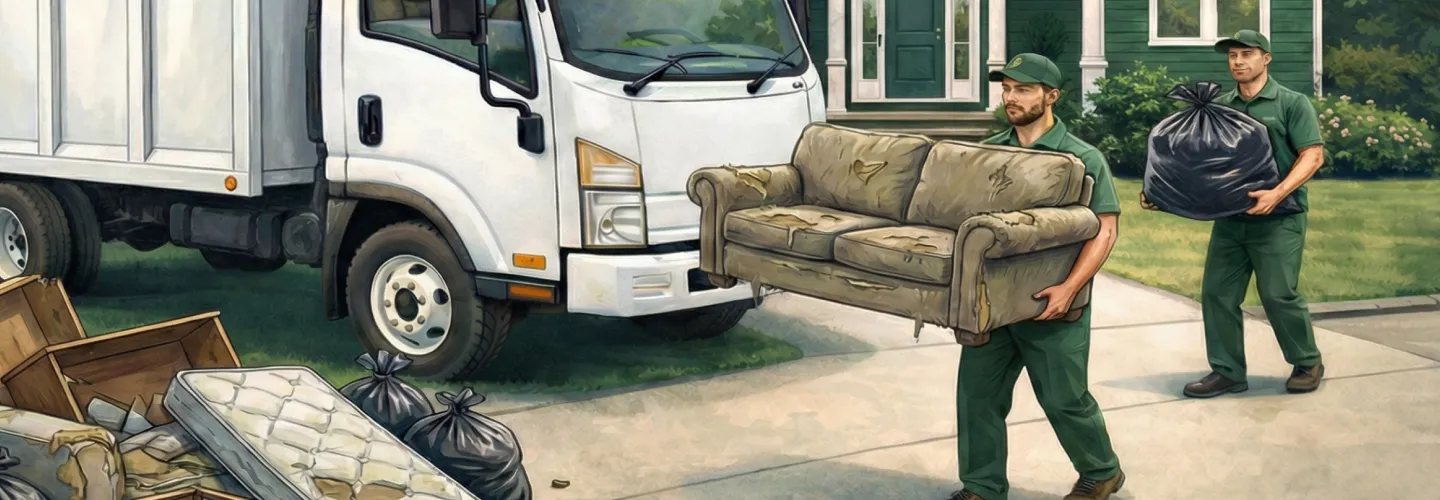
Hampton Yard Waste Removal Services
Choose our Yard Waste Removal for fast, eco-friendly service that keeps your property spotless and your weekends stress-free—let us handle the mess so you can enjoy your outdoor space.
Get a Free QuoteOur Hampton Junk Removal Services
Yard Waste Removal in Hampton, GA – Local Service Guide
Yard waste removal in Hampton, GA is essential for maintaining curb appeal and property health, especially in neighborhoods like Crystal Lake and Tara Place. Homeowners often need removal services after seasonal yard cleanups, storm debris, or landscaping projects. In spring and fall, leaf and branch accumulation is common, while summer storms can bring down limbs that require prompt disposal. For residential items like old furniture or appliances, residents typically schedule pickups during home renovations or when replacing worn-out items. Local disposal options include recycling, donation, or city-approved waste facilities, with logistics influenced by property access and weather conditions.
Commercial properties in areas such as downtown Hampton and along East Main Street face unique challenges, including higher waste volumes and the need for discreet, timely service. Specialty projects—like estate cleanouts or construction debris removal—require careful planning and coordination, especially when dealing with large volumes or restricted access. For all yard waste removal, understanding local regulations is crucial. Residents can find guidance on disposal rules and schedules through the Hampton Public Works Department.
Benefits of Yard Waste Removal in Hampton
Fast Yard Waste Pickup
Eco-Friendly Disposal
Affordable Service Rates
Experienced Local Team
Flexible Scheduling Options
Comprehensive Cleanup Solutions
Coordinating Yard Waste Disposal with Hampton's Public Works Department
Residents of Hampton, GA, must follow municipal guidelines when disposing of yard waste such as grass clippings, leaves, branches, and brush. The Hampton Public Works Department oversees sanitation services, including the collection and proper handling of organic debris generated from routine landscaping and seasonal property maintenance. Yard waste should be separated from household trash and placed curbside according to the city's designated collection schedule. Key preparation requirements include:
- Branches and limbs must be cut to lengths no longer than four feet and bundled securely
- Grass clippings and leaves should be placed in biodegradable bags or approved yard waste containers
- Stumps, root balls, and large logs typically require special pickup arrangements or self-hauling to an approved facility
- Dirt, rocks, and sod are generally not accepted as part of routine yard waste collection
- Yard waste must not block sidewalks, storm drains, or rights-of-way while awaiting pickup
Residents should contact Public Works directly to confirm current pickup days and any seasonal schedule adjustments.
Hampton Public Works Department
1907 Highway 81, Hampton, GA 30228
Phone: (770) 946-4306
Official Website: Hampton Public Works Department
Georgia's Solid Waste Management Act and Yard Debris Compliance
Georgia regulates yard waste disposal under the Georgia Comprehensive Solid Waste Management Act (O.C.G.A. § 12-8-20), which establishes statewide standards for the collection, transportation, and disposal of solid waste, including organic yard debris. The Georgia Environmental Protection Division (GA EPD) enforces these requirements at the state level, while municipalities like Hampton implement local ordinances that may impose additional restrictions. Important state-level provisions affecting Hampton residents include:
- Yard waste landfill restrictions: Georgia encourages diversion of yard trimmings from municipal solid waste landfills; yard trimmings have been banned from municipal solid waste landfills since 1996
- Composting facility permits: Facilities accepting yard waste for composting must hold valid permits from GA EPD
- Burning restrictions: Open burning of yard waste is regulated by Georgia's Air Quality rules and may require local permits or be prohibited within city limits
- Illegal dumping penalties: Disposing of yard waste in unauthorized locations, waterways, or vacant lots may result in fines and code enforcement action under both state and Hampton city ordinances
Compliance with these regulations protects local water quality and reduces strain on landfill capacity throughout Henry County.
Hampton's Stormwater Protection Requirements for Yard Waste Handling
Improper yard waste disposal directly impacts Hampton's stormwater infrastructure and local waterways. The Hampton Stormwater Management program enforces regulations designed to prevent organic debris from entering storm drains, which can cause blockages, flooding, and water quality degradation. Yard waste left in streets, ditches, or near drainage structures contributes to nutrient loading in downstream water bodies. Residents and landscaping contractors must observe the following stormwater-related requirements:
- Never blow or rake grass clippings, leaves, or debris into streets, gutters, or storm drains
- Maintain a vegetative buffer of at least 25 feet from streams and drainage channels when stockpiling yard waste
- Erosion control measures must be in place when clearing large areas of vegetation, particularly on slopes
- Composting piles should be located away from impervious surfaces and drainage pathways
- Contractors performing large-scale land clearing must comply with Georgia's erosion and sedimentation control requirements
Hampton Stormwater Management
1907 Highway 81, Hampton, GA 30228
Phone: (770) 946-4306
Official Website: Hampton Stormwater Management
Hampton Tree Board Regulations and Yard Waste from Tree Removal
Property owners in Hampton should be aware that tree removal and significant pruning activities may be subject to oversight by the Hampton Tree Board, which provides guidance on urban forestry preservation and sustainable landscape management. Removing trees—particularly mature or protected species—without proper authorization can result in code violations. Yard waste generated from tree work requires careful handling and disposal. Residents should consider the following:
- Protected tree species may require approval from the Tree Board before removal; check with the city before cutting
- Large volumes of wood debris from tree removal may exceed standard curbside collection limits and require hauling to an approved disposal or composting facility
- Chipped or mulched wood can often be reused on-site for landscaping, reducing disposal needs
- Storm-damaged trees may qualify for expedited removal and disposal coordination through Public Works during declared weather emergencies
- Hiring a tree service: Verify that contractors hold proper insurance and dispose of debris at permitted facilities
Hampton Tree Board
1907 Highway 81, Hampton, GA 30228
Phone: (770) 946-4306
Official Website: Hampton Tree Board
Sorting and Separation Requirements for Hampton Yard Waste Disposal
Proper sorting of yard waste is essential for compliance with both Hampton's municipal standards and Georgia's landfill diversion goals. Mixing yard debris with household garbage, construction materials, or hazardous substances can result in rejected loads at disposal facilities, contamination fees, and potential code enforcement action. Hampton residents and contractors should follow these material separation guidelines:
- Acceptable yard waste: Grass clippings, leaves, small branches (under four feet), hedge trimmings, weeds, and garden plant material
- Not accepted as yard waste: Treated lumber, painted wood, pressure-treated fence posts, plastic pots, landscape fabric, and synthetic turf
- Prohibited contaminants: Pesticide containers, motor oil, gasoline, fertilizer bags, and any hazardous waste as defined by EPA RCRA regulations must be kept separate and disposed of through appropriate hazardous waste channels
- Bagging requirements: Use paper bags or clearly labeled rigid containers; plastic bags may not be accepted at composting facilities
- Contractor loads: Commercial landscapers generating large volumes should transport sorted yard waste directly to a permitted composting or yard waste processing facility in Henry County
Proper separation ensures that organic material can be composted or mulched rather than occupying limited landfill space.
What Neighborhoods Do We Serve Throughout Hampton, GA?
- Downtown Hampton: The historic core along Main Street features older residential properties with mature tree canopies that generate significant seasonal leaf and branch debris. Narrow lot lines and limited side-yard access may require manual hauling of yard waste to the curb for collection.
- Bear Creek Estates: This established single-family subdivision has large, wooded lots that produce substantial volumes of leaves, pine straw, and fallen limbs, particularly during fall and after storms. Wide driveways and cul-de-sacs allow straightforward curbside placement and equipment access.
- Hampton Lakes: Properties near pond and lake features must observe stormwater buffer requirements when staging yard waste. Residents should avoid placing debris near shorelines or drainage easements to prevent nutrient runoff.
- Lovejoy Road Corridor: A mix of older residential parcels and newer developments along this corridor often requires coordination with Henry County services for properties near the city boundary. Larger rural-style lots may generate brush and clearing debris exceeding standard pickup limits.
- Hampton Oaks: This neighborhood of single-family homes with moderate lot sizes experiences routine yard waste from lawn maintenance and ornamental landscaping. HOA guidelines may dictate timing and placement of curbside debris.
- Tussahaw Point Area: Properties adjacent to Tussahaw Creek must exercise particular care with yard waste staging to comply with erosion control and riparian buffer regulations enforced through Hampton's stormwater program.